
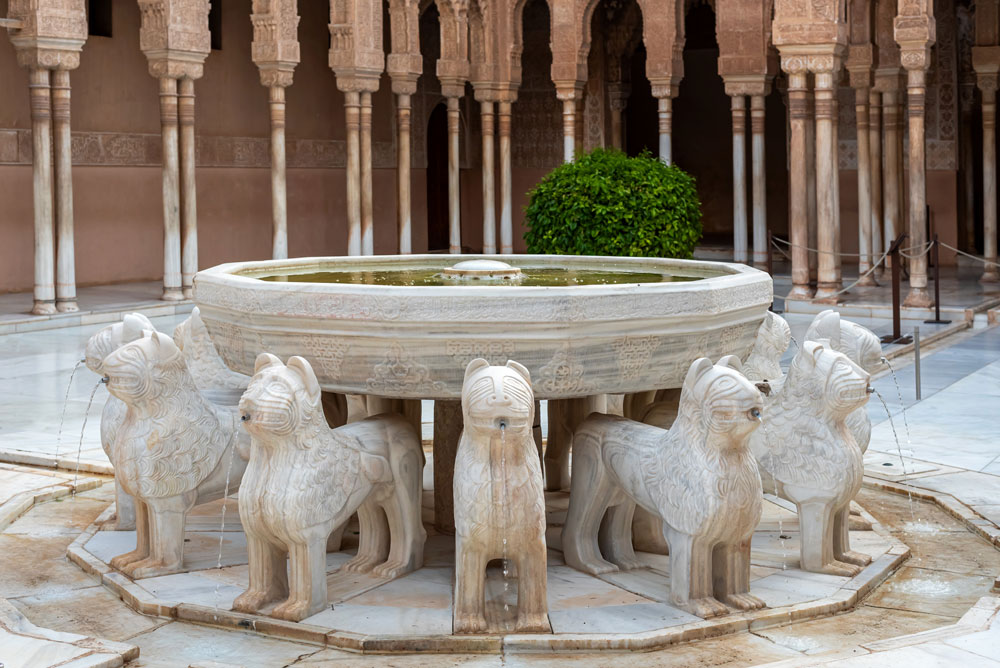
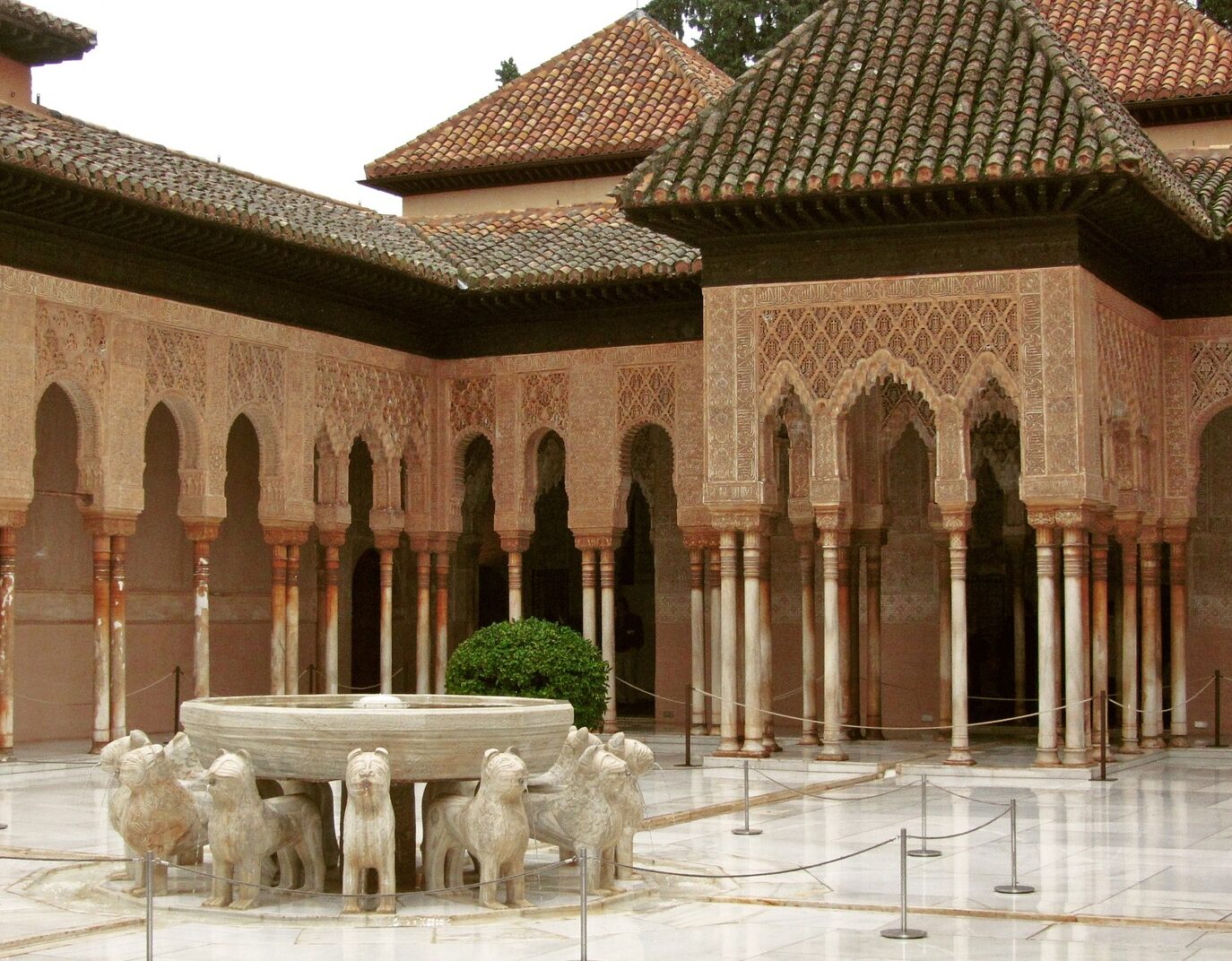
The Patio de los Leones is one of the most emblematic and recognisable spaces in the Alhambra. This courtyard represents the height of Islamic art on the peninsula and has become a universal symbol of Granada.
Its architectural harmony, the famous central fountain, and the delicate balance between water, light, and decoration make millions of visitors wonder not only about its history, but also about its curiosities, how many sculptures it contains, or whether the lions we see today are the originals.
History of the Court of the Lions in the Alhambra
The Patio de los Leones (Court of the Lions) in the Alhambra was built in the 14th centuryduring the reign of Sultan Muhammad V, one of the great artistic promoters of the Nasrid period. This space was part of the sultan's private palace and was designed as a place for representation, rest and daily life.
It was therefore conceived as a private space for the sultan, away from the more public areas of the palace. This intimate function explains the delicacy of its decoration and the extreme care taken with every detail, designed to be contemplated calmly and in silence.
The courtyard design breaks with previous models and becomes a unique work within Islamic architecture. The layout of the galleries, the prominence of water, and the integration of symbolic elements reflect an advanced conception of palace space.
Where is the Patio de los Leones within the Alhambra?
For those wondering where the Patio de los Leones is located, it is inside the Nasrid Palaces, connecting some of the most important rooms, such as the Hall of the Abencerrajes and the Hall of the Two Sisters.
Access is strictly controlled and is only possible with a ticket to the Palaces, at the assigned time.
Fountain of the Lions in the Alhambra
The Fountain of the Lions in the Alhambra is the central feature of the courtyard and one of the most photographed icons of the monument. It consists of a large circular basin supported by twelve lion sculptures, from whose mouths water flows.
Beyond its beauty, the fountain serves a symbolic and technical function. The water flows in the four main directions of the courtyard, representing the Islamic paradise and, at the same time, demonstrating the advanced hydraulic knowledge of the Nasrid engineers.
How many lions are there in the Courtyard of the Lions?
One of the most frequently asked questions is how many lions there are in the Courtyard of the Lions. The answer is clear: twelve lions, all carved from marble and placed symmetrically around the fountain.
Each one has slight differences, which has given rise to multiple interpretations of their origin and meaning.
The original lions of the Alhambra
For years, there has been debate as to whether the original lions of the Alhambra are the ones we see today in the fountain. Following an extensive restoration process, the original sculptures were treated and are currently still on display in the courtyard, although they are subject to strict conservation controls.
This work made it possible to recover hidden details and ensure the preservation of one of the most valuable pieces in the monumental complex.
Interesting facts about the Patio de los Leones
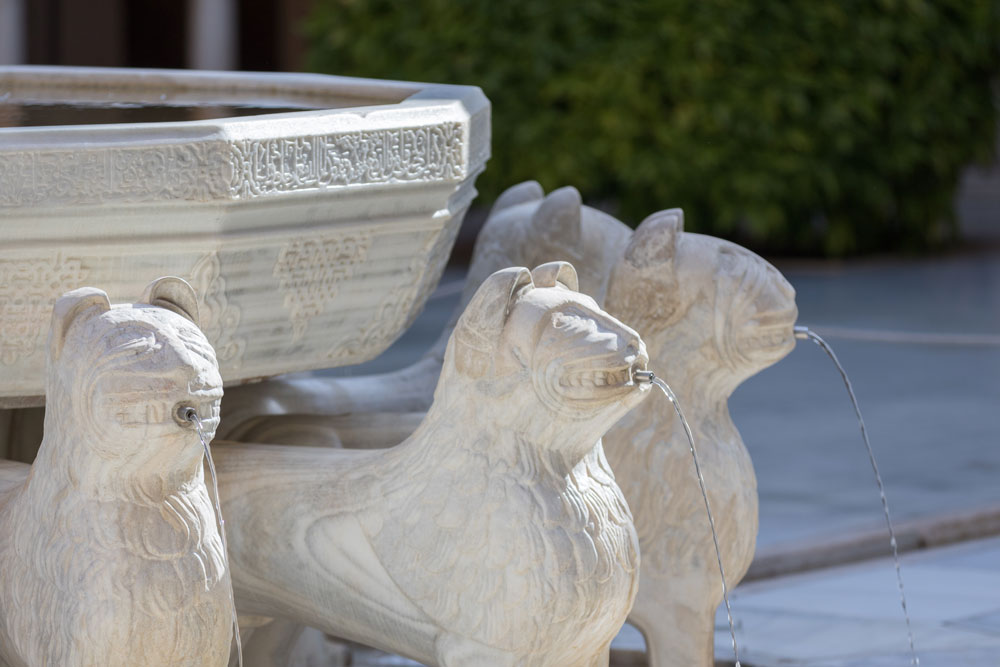
The Patio de los Leones is much more than just a beautiful space; it is full of details and meanings that make it a unique work of Islamic architecture. One of the main curiosities of the courtyard is the presence of animal sculptures, something unusual in Islamic art, where figurative representation was generally limited. The lions break this rule and reinforce the exceptional nature of the complex.
Another of the great curiosities of the Patio de los Leones is the complex hydraulic system that feeds it. The water not only has decorative value, but also symbolic value: it flows from the central fountain in all four directions of the courtyard, evoking the idea of Islamic paradise and demonstrating the advanced technical knowledge of the Nasrid engineers.
The poems inscribed on the walls of the courtyard are another unique feature. These inscriptions describe the fountain as a living jewel and compare the flow of water to pearls and light, integrating architecture, literature and symbolism in the same space.
It is also striking that the twelve lions are not identical to each other. Each sculpture has slight differences in the shape of the face, mane or paws, which has given rise to numerous theories about their origin and meaning.
Some studies suggest that they may have come from an earlier palace, which would further increase their historical value.
Alhambra tickets with Patio de los Leones
To access the Patio, it is essential to purchase Alhambra tickets with Patio de los Leones, i.e. tickets that include a visit to the Nasrid Palaces. Access is only permitted at the time indicated on the ticket, so it is essential to arrive in advance.
Due to high demand, it is advisable to book tickets well in advance, especially during peak season, as capacity is limited and time control is very strict.
The Patio is not only one of the most recognisable images of the Alhambra, but also a masterpiece where architecture, water and symbolism combine perfectly. Learning about its history, understanding the meaning of its fountain and discovering its curiosities allows you to fully appreciate one of the most important spaces in Nasrid art.