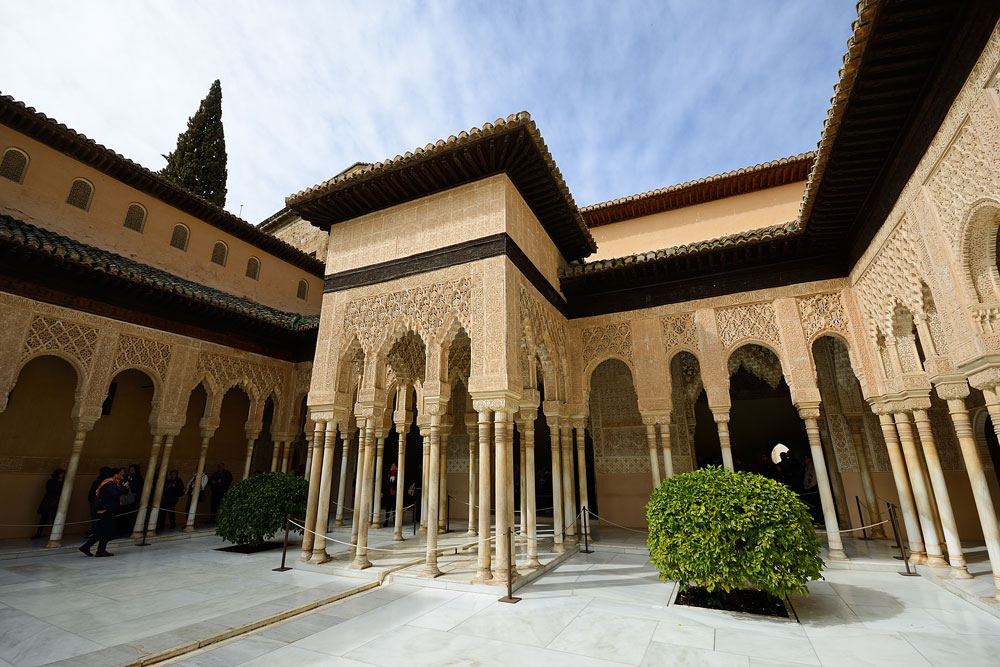
The Nasrid Palaces represent the pinnacle of Islamic art on the Iberian Peninsula and form the monumental heart of the Alhambra. Their delicate architecture, the rich decoration of their halls, and the masterful use of water and light make them one of the most admired palace complexes in the world.
Visiting the Nasrid Palaces—one of the most popular parts of the Alhambra—means taking a journey through centuries of history, power, and symbolism, and discovering how the Nasrid sultans lived in the last Muslim kingdom on the peninsula.
What Are the Nasrid Palaces?
The Nasrid Palaces are a complex of palatial buildings constructed between the 13th and 15th centuries by the sultans of the Nasrid dynasty. They served as the sultan’s official residence and the political and ceremonial center of the Kingdom of Granada.
Here were the private quarters, the audience chambers, and the courtyards where court life unfolded. To understand what the Nasrid Palaces of the Alhambra are, you must view them as a true palatine city designed to combine beauty, privacy, and power.
This complex consists mainly of three areas: the Comares Palace, the Palace of the Lions, and several adjoining rooms arranged around courtyards, pools, and galleries.
Interior of the Nasrid Palaces of the Alhambra
The interior of the Nasrid Palaces at the Alhambra is one of the finest examples of the refinement of Islamic art. Each room is designed to be a sensory experience where the decoration, light, and sound of water blend harmoniously.
Among the most notable spaces are:
- The Patio de los Arrayanes, the centerpiece of the Comares Palace.
- The Hall of Ambassadors, the largest and most solemn room.
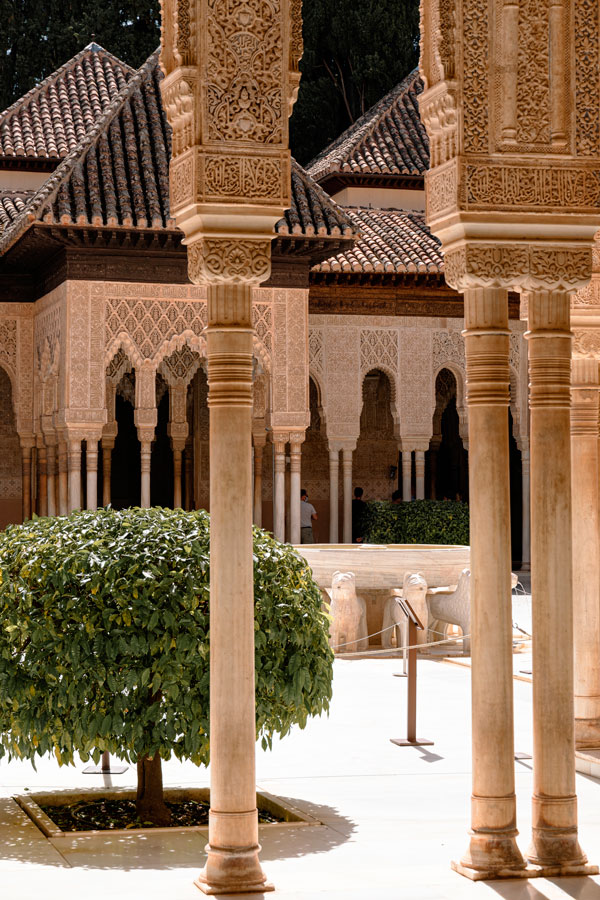
- The Patio de los Leones, the universal symbol of the Alhambra.
- The Hall of the Two Sisters and the Hall of the Abencerrajes, famous for their muqarnas vaults.
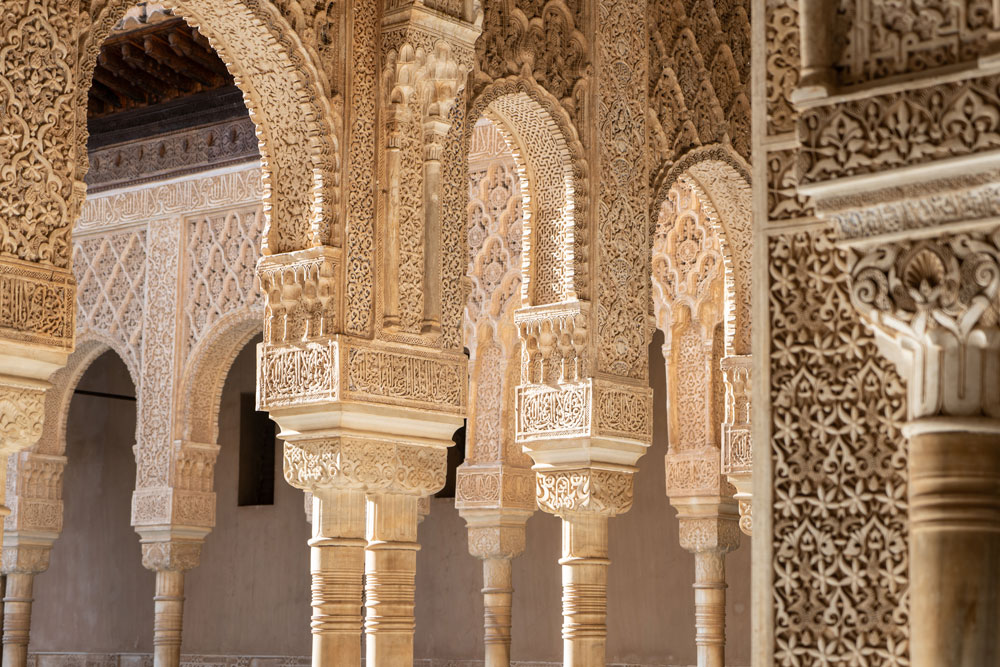
The walls are covered with stucco work featuring poetic inscriptions, geometric patterns, and plant motifs, where art and writing merge into a single decorative language.
Why They Are Unique in the World
To tour the Nasrid Palaces is to immerse oneself in a conception of space where nothing is left to chance. Every courtyard, every room, and every decorative element is designed to create a sensory experience based on harmony, intimacy, and balance. The architecture does not seek to dominate, but rather to envelop the visitor through light, the sound of water, and the repetition of geometric shapes.
One of the features that makes these palaces unique is the symbolic use of water. Fountains, ponds, and canals not only cool the atmosphere but also organize the space and reflect the architecture, visually multiplying its beauty. Carefully filtered natural light changes throughout the day and transforms the perception of each room.
Added to this is extremely detailed decoration, where stucco work, calligraphy, and plant motifs turn the walls into veritable visual texts. Far from being mere ornamentation, these inscriptions convey political, religious, and poetic messages that reinforce the identity of the place.
All of this makes a visit not just a tour of monuments, but a contemplative experience. These palaces impress not because of their size, but because of their ability to convey beauty, serenity, and sophistication—which explains why they continue to be admired centuries after their construction.
How long does it take to see the Nasrid Palaces?
One of the most common questions is how long it takes to tour the Nasrid Palaces. The recommended average time for the tour ranges from 60 to 90 minutes, depending on the visitor’s pace and interest.
If you take your time, stopping to admire the decorative details and the main halls, you should set aside at least a full hour. It’s important to remember that access is strictly controlled, and entry is only permitted during the time slot indicated on your ticket.
Tickets to the Nasrid Palaces
Access to the palaces is only possible with tickets to the Nasrid Palaces included in the general admission ticket for the monument. This is the most popular area of the complex and the one with the strictest capacity controls.
Tickets specify an exact entry time, and entry is not permitted outside of that time slot. For this reason, it is essential to arrive early and plan your tour of the rest of the monument carefully.
Due to high demand, especially on weekends and during peak season, it is recommended to purchase tickets well in advance. Without them, it is not possible to enter the Palaces, even if you are visiting the rest of the complex.
The Nasrid Palaces are the artistic and symbolic heart of the Alhambra. Their architecture, courtyards, and halls reflect the splendor of the Nasrid dynasty and make the visit a unique and unforgettable experience.
Exploring the interior of the Nasrid Palaces of the Alhambra, understanding their history, and planning your visit carefully will allow you to fully enjoy one of the most extraordinary palace complexes in the world.
